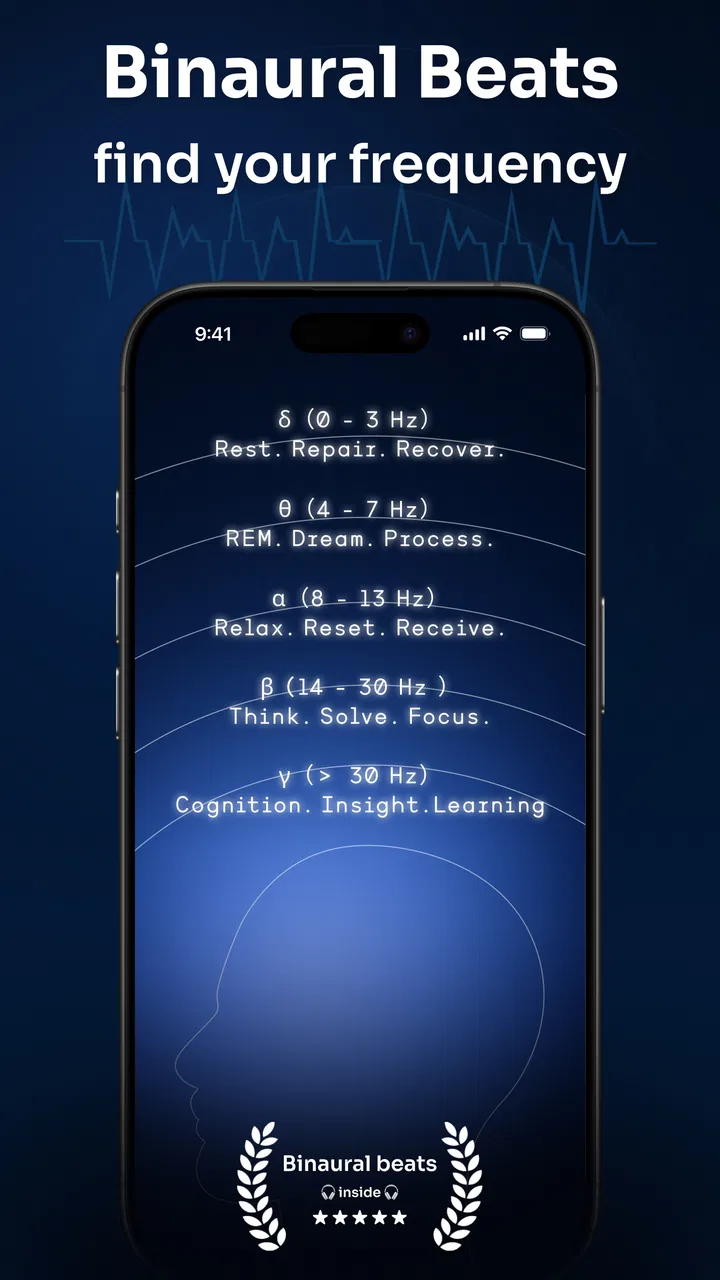
Anima: Binaural Beats
- 4.8
- Rating
- 50.00K
- Installs
- Free
- Price

 Analysis by App-foxy
I spend a lot of time testing audio apps that promise better sleep, calmer evenings, or sharper concentration, and Anima: Binaural Beats is one of the more focused options I have tried in that space. It is a free Music & Audio app from ZEUS AI Limited, built around binaural-beat listening rather than songs, podcasts, guided meditation, or a large library of ambient recordings. That narrow purpose is both its main appeal and the first thing you should understand before installing it.
The idea is simple: you listen through headphones while the app presents carefully separated tones intended to support a particular listening goal. Its store summary points to deep sleep, focus, stress relief, and tinnitus relief. I would treat those labels as use cases to explore, not as medical promises. For me, the app works best as a quiet routine-builder: I choose a suitable session, lower the volume, remove distractions, and give my attention one consistent sound instead of reaching for another playlist.
The app has an average rating of 4.8 from around 13 thousand ratings, with over 50 thousand installs. That gives it a reassuring level of early interest, although the install base is still much smaller than that of established sleep and meditation platforms. It is rated for Everyone, and it runs on Android 8.0 or later. The current release is version 1.1.6(1), while the app’s release date is April 2, 2026.
You May Also Like

 AccuWeather: Weather Radar
AccuWeather Review: A Quick, Clear Forecast for Everyday Decisions
For everyday plans, the best forecast is the one you can understand quickly. AccuWeather makes rain timing, radar, and local conditions easy to act on, with a few trade-offs.

 Hill Climb Racing
Why Hill Climb Racing Still Turns Crashes Into One More Run
A tiny car, a bumpy hill and one more upgrade: Hill Climb Racing keeps resurfacing because its simple chaos makes every near-miss feel personal.

 AliExpress - Shopping App
AliExpress Makes Global Shopping Feel Personal, but Shoppers Bear the Risk
AliExpress turns a global marketplace into a pocket-sized discovery engine. Its reach is useful, its shopping loop compelling, and its trade-offs easy to miss.

 Lords Mobile: Kingdom Wars
Lords Mobile Is a Kingdom-Building Routine, Not a Quick Match
A case-by-case verdict on the building, battles, device demands, and social commitments that make Lords Mobile rewarding for some players and exhausting for others.

 PDF Scanner app - TapScanner
TapScanner Makes Paperwork Easier to Capture, Check, and Share
TapScanner makes scanning with a phone feel less like a rescue operation and more like a dependable step in getting work done. Its capture tools are useful, though not flawless.

 Block Blast!
 Shows How Much a Puzzle Game Can Leave Out
A quiet grid game shows why puzzle players increasingly value instant clarity, repeatable skill and low-pressure play—and where the genre still needs to catch up.
More From Our News Desk
View All News


How Anima fits into everyday listening
I find Anima easiest to judge as a small part of a routine, not as something that should run in the background all day. Before opening a session, I’d decide what I want the sound to accompany—one focused task, a short wind-down, or a quiet pause—then check afterward whether it genuinely helped. That simple before-and-after check can make it easier to tell a useful habit from audio that is merely present.
A deliberately narrow approach to relaxation
Most wellness audio apps try to do everything at once. They combine music, rain, white noise, breathing exercises, spoken meditation, sleep stories, and sometimes coaching. Anima takes a different route. Its identity is tied to genuine binaural beats, so the experience is less about entertainment and more about creating a steady auditory environment for a specific moment.
That makes the first few minutes important. You are not opening it to browse familiar artists or find a new podcast. You are opening it because you want a controlled sound experience. I found that distinction useful when my attention was already overloaded. A normal playlist can make me start choosing tracks, judging the music, or waiting for a favorite part. A binaural-beat session removes most of those decisions.
The headphone requirement is also central to the concept. Binaural beats depend on each ear receiving a different tone, so listening through a phone speaker is not the same experience. If you usually fall asleep with a speaker across the room, or if you dislike wearing earbuds in bed, this app may not fit your routine as naturally as a simple sound machine. That is not a flaw in the app so much as a practical limitation of the format.
What the main use cases feel like in practice
For focus, I would use Anima before a task that benefits from a quiet, repetitive background: reading, sorting notes, studying, or doing routine computer work. The important advantage is that it does not demand active attention. I can let it sit behind the task without following lyrics or absorbing spoken instructions. It is especially helpful when silence feels uncomfortable but music feels too engaging.
For sleep, I see it as a wind-down aid rather than a guaranteed sleep switch. A useful routine would be to start a session while preparing for bed, keep the volume gentle, and stop interacting with the phone afterward. The app can become a cue that the day is ending, but it cannot compensate for bright screens, late caffeine, an uncomfortable room, or a noisy environment. I would also avoid assuming that a longer session is automatically better.
Stress relief is another area where expectations matter. A repetitive tone can give the mind something neutral to settle around, particularly after a busy day. However, people respond differently to high-pitched or continuous sounds. I found it more sensible to test a short listening period while awake, rather than beginning with it at bedtime and discovering that the tone is irritating.
The tinnitus-related wording deserves extra care. I would not use this app as a substitute for assessment or treatment from a qualified professional. Tinnitus can have different causes, and sound that feels neutral to one person may feel unpleasant to another. If listening increases discomfort, I would stop immediately. In that context, the app is best considered an optional sound experiment, not a medical solution.
The free starting point and the paid boundary
Anima is free to install, which makes trying its basic experience relatively low risk. The app also includes in-app purchases priced from $7.99 to $129.99 per item. That is a wide range, so the value question depends heavily on what is available without paying and on whether the paid material becomes part of your daily routine.
I would not judge the app by the highest purchase figure alone, and I would not assume that paying is necessary. The sensible approach is to install it, test the accessible listening experience in the situations that matter to you, and only consider an upgrade if it offers something you genuinely use. A free app can be excellent value if it solves one small recurring problem; an expensive purchase is poor value if you only open it twice.
This is where Anima differs from a conventional music service. A music subscription gives you a huge catalog and broad entertainment value. Here, the possible paid value is much narrower: you are paying for a more specialized audio tool. That can make sense for someone who wants a repeatable focus or sleep routine, but it is harder to justify for someone who mainly wants variety.
A realistic evening routine
Imagine arriving home after work with a crowded mind but no desire to follow a guided meditation. I would put on comfortable headphones, choose a stress-oriented or calming session, and leave the phone on a nearby surface rather than holding it. For the first few minutes, I would simply notice whether the sound feels smooth, distracting, or tiring. If it helps, I could continue while stretching or preparing clothes for the next morning.
The useful part of that routine is not a dramatic instant effect. It is the reduction of choices. I am not searching for the perfect song, reading comments, or deciding which episode to play. Anima gives me a consistent audio anchor. If the sound feels wrong that evening, I would switch to silence, gentle environmental audio, or a spoken relaxation track instead of forcing the session.
For a workday, I would use a different workflow. I would start a focus session before opening email, set the phone aside, and treat the audio as a boundary around one task. When the task is finished, I would stop the session rather than leaving it running all day. This prevents the sound from becoming unnoticed background clutter and helps me identify whether it is actually improving concentration.
Small habits that make the app more useful
My first practical tip is to test with headphones you already know are comfortable. The quality of the experience depends not only on the app but also on fit, sound balance, and whether the earbuds create physical pressure. A tone that seems acceptable through one pair may feel sharp through another. I would keep the volume lower than the level used for energetic music and adjust gradually.
My second tip is to compare the same listening goal at different times of day. A session that feels calming in the afternoon may feel too noticeable in bed. Likewise, a focus-oriented sound that helps during paperwork may be distracting while reading dense material. This simple comparison tells you more than trying many options for only a minute each.
Third, I would build a stopping rule. If I notice pressure, annoyance, headache, worsening tinnitus, or increased alertness, I would end the session. The promise of a sleep or stress app can tempt people to keep going because they expect the benefit to arrive later. With binaural audio, comfort is a better guide than persistence.
A fourth useful habit is to keep the phone physically away from the work area. Anima can support concentration, but the app cannot stop notifications, social media, or incoming messages from interrupting you. The best result comes when the audio is only one part of a distraction-free setup. Airplane mode, Do Not Disturb, or simply placing the phone out of reach may matter more than changing between similar sound options.
Where the experience may fall short
The focused design will not suit everyone. If you want rich musical arrangements, spoken guidance, nature recordings, or a large collection of sleep stories, Anima may feel too minimal. Some listeners need a voice to guide breathing; others need a familiar song or a gradual ambient soundscape. Binaural beats are not a universal replacement for those formats.
There is also a learning curve in judging what you are hearing. A normal song gives immediate feedback: you like it, or you do not. With binaural beats, the benefit is more personal and often tied to context. You may need several calm trials to decide whether the sound helps you focus, makes you sleepy, or simply becomes irritating. That uncertainty can make the app less satisfying for people who expect an obvious result on the first use.
Headphones create another trade-off. They may provide the separation required for the audio approach, but they can be uncomfortable during sleep, inconvenient when moving around, or unsuitable if you need to remain aware of your surroundings. I would not use them while cycling, driving, walking near traffic, or in any situation where environmental awareness matters.
The purchase structure also deserves a careful look before spending money. The free entry point is attractive, but the range from $7.99 to $129.99 per item means that paid value should be evaluated against your actual frequency of use. Someone who listens every evening may see a specialized purchase differently from someone who wants occasional background sound. I would make the decision based on repeated personal benefit, not on the app’s calming language.
Who is most likely to get value
Anima is a good fit for people who already enjoy quiet, repetitive audio and want a more intentional alternative to playlists. It is particularly suitable for headphone users who want separate routines for concentration, winding down, and experimenting with sound-based relaxation. The straightforward focus can also appeal to anyone who finds large wellness apps overwhelming.
Students and remote workers may appreciate the ability to create a clear start signal for a study block or desk session. The app is less useful as a productivity system than as an audio layer around one. I would pair it with a timer, a written task, and notification control rather than expecting the sound alone to organize the day.
People exploring sound for tinnitus should be more cautious. If you are curious, use a low volume and a short trial in a calm setting, while treating any negative reaction as a reason to stop. Persistent or troubling symptoms deserve professional attention. The app’s presence in a tinnitus-related use case should not encourage self-diagnosis.
It is probably not the right choice for children who need a parent-approved sleep routine, for anyone who cannot comfortably use headphones, or for listeners who want a broad entertainment catalog. Although the age rating is Everyone, age suitability does not guarantee that the sound format will be comfortable or appropriate for every household routine.
How it compares with familiar alternatives
Compared with a music streaming service, Anima is less flexible but more purposeful. A music service wins when you want artists, albums, mood playlists, or something engaging during a long session. Anima wins when the presence of lyrics and musical changes would pull you away from the task.
Compared with a white-noise or nature-sound app, the difference is the listening method. White noise and rain can work through a speaker and are often easier to share in a room. Binaural beats are more personal and headphone-dependent. If you sleep beside someone who does not want to hear your audio, a speaker-based option may be less practical—or headphones may be the only workable route, depending on your comfort.
Compared with a guided meditation app, Anima asks less of you. There is no need to follow a teacher’s words or match a breathing pace. That is valuable when spoken guidance feels distracting. On the other hand, people who need structured instruction, emotional support, or a clear meditation lesson will likely get more from a guided program.
Compared with a dedicated medical or tinnitus service, Anima is not the option I would choose for assessment, treatment planning, or professional monitoring. Its strength is accessible personal listening, not clinical care. Keeping that boundary clear makes the app easier to evaluate honestly.
My buying decision
I like Anima most when I treat it as a specialized tool rather than a complete wellness platform. The free installation makes experimentation easy, and the app’s narrow focus can be refreshing after using services packed with menus and unrelated content. The developer, ZEUS AI Limited, has positioned it around a clear audio idea, and the strong average rating suggests that many early users find that approach appealing.
Still, I would not recommend paying immediately. First, test whether the sound is comfortable through your headphones, whether it helps with a real task, and whether you naturally return to it. If it becomes part of a dependable bedtime or work routine, a paid option may offer worthwhile value at the lower end of the listed purchase range. If you only want occasional calming music, the purchase is harder to justify.
My verdict is to try it if you are curious about binaural beats and prefer quiet, nonverbal audio. Keep your expectations practical, especially around sleep, stress, and tinnitus. Skip it if you dislike headphones, need spoken guidance, or want a large music and ambient-sound catalog. The best reason to use Anima is not the promise of an instant transformation, but the chance to create a simple, repeatable listening habit that fits one specific part of your day.
FAQs for Anima: Binaural Beats
01What is Anima: Binaural Beats and how does it work?
Anima: Binaural Beats is a wellness and relaxation app that uses layered audio tones to create binaural beats. These beats are designed to encourage different mental states, such as relaxation, focus, meditation, or sleep. To experience the intended effect, you generally need to listen with stereo headphones or earbuds, since each ear receives a slightly different frequency.
02Do I need headphones to use Anima: Binaural Beats?
Yes, headphones are strongly recommended for Anima: Binaural Beats. Binaural beats depend on sending separate frequencies to the left and right ears, something ordinary speakers may not reproduce effectively. You can still listen to the app without headphones as background audio, but the binaural effect may be reduced or absent. Keep the volume comfortable to protect your hearing.
03Can Anima: Binaural Beats help with sleep, concentration, or anxiety?
The app may be useful as a relaxation or focus aid, depending on the session and your personal response to sound. Some users may find the audio helpful for winding down, studying, meditating, or creating a calmer environment. However, results vary, and it should not be considered a medical treatment or a replacement for professional help when dealing with anxiety, insomnia, or other health concerns.
04Is Anima: Binaural Beats free to download, and are there in-app purchases?
Anima: Binaural Beats may be available to download at no initial cost, but access to specific sessions, sound categories, customization tools, or premium content can depend on the current version and subscription model. Before confirming a purchase, review the app-store listing carefully for pricing, trial conditions, renewal terms, and cancellation instructions, as these details can change over time.
05Is Anima: Binaural Beats safe for everyone to use?
Most people can listen to relaxing audio at a moderate volume without problems, but caution is sensible. Stop using the app if you experience discomfort, dizziness, headaches, or unusual reactions. People with a history of seizures, sound sensitivity, neurological conditions, or other medical concerns should consult a qualified professional before using brainwave-oriented audio. Never use it while driving or operating machinery.
Pros
- Offers multiple beat frequencies for focus
- relaxation
- sleep
- and meditation.
- Simple interface makes it quick to start a session without complicated setup.
- Timer options help create consistent listening routines and bedtime habits.
- Works well with headphones and can complement mindfulness or study sessions.
- Minimal visual design keeps attention on the audio experience.
Cons
- Binaural beats require headphones
- limiting use with speakers or shared devices.
- Results can vary widely depending on personal sensitivity and listening preferences.
- Some sessions or features may require a subscription or in-app purchase.
- Long listening sessions may become repetitive without greater audio variety.
- Not suitable for users sensitive to rhythmic sounds or prone to audio-triggered discomfort.

Anima: Binaural Beats
Gallery